Clear the Whole Drainage Route
Gutter cleaning should restore movement, not simply remove the debris that is easiest to see. Rain has to travel along the trough, enter the outlet, pass each downspout elbow, and leave through an open discharge. A blockage anywhere along that route can send water over the front edge or behind the gutter.
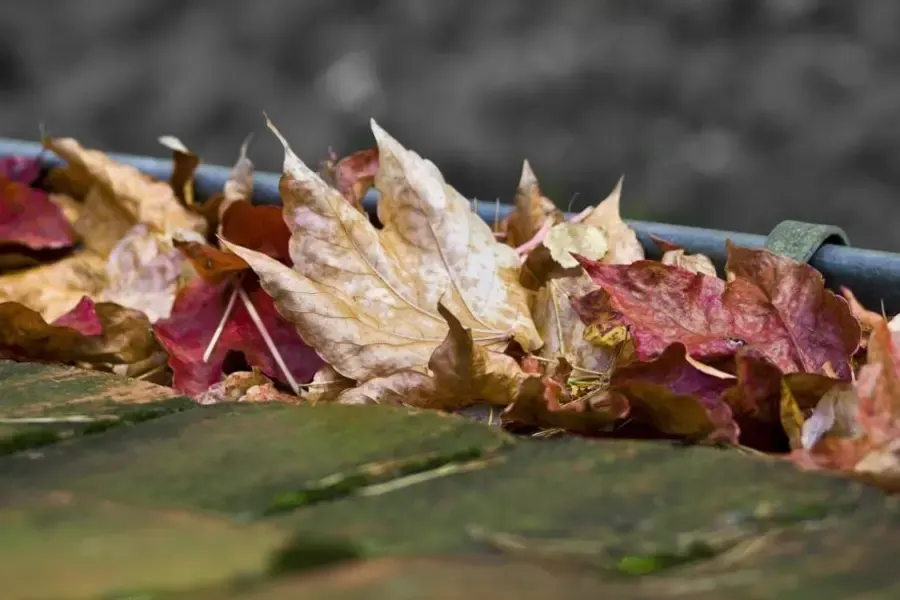
Greensboro debris tends to layer. Willow oak and maple leaves create broad pockets. Pine needles thread through them and hold the pile together. Spring pollen, roof grit, and wet catkins fill smaller spaces until the mass begins to shed water. A hot-season thunderstorm then exposes the restriction in a hurry.
What a Useful Cleaning Addresses
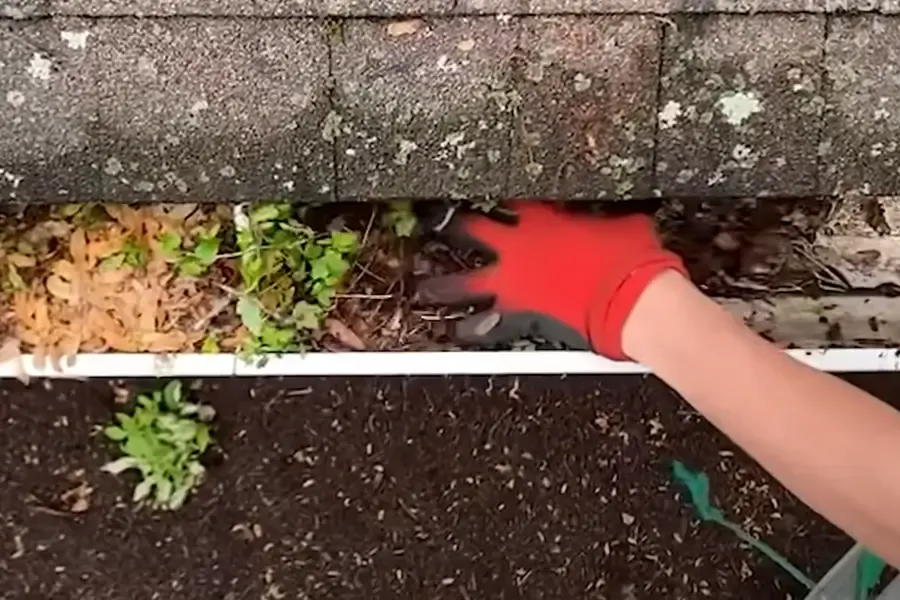
The work begins with the accessible gutter channels and valleys that feed them. Loose leaves, needles, twigs, and compacted organic material need to come out without pushing the clog farther into the outlet. Downspout openings deserve close attention because catkins and pine needles often gather there.
An open top does not prove that the downspout is clear. The exit should be observed or checked so a hidden elbow plug is not left behind. Visible hangers, joints, and connections can also be noted while the trough is empty. Cleaning will not fix a separated seam or poor pitch, but it often makes those conditions easier to identify.
The final discharge matters around Piedmont red clay. An extension should have an open endpoint and direct water away from the structure. A clear downspout that empties into a low bed against the house only moves the concern from the roof edge to the ground.
Signs Worth Checking From the Ground
- Water clears the front in one concentrated spot.
- Little water leaves a downspout during steady rain.
- Plants or a dark debris line are visible above the gutter lip.
- Water stains appear beneath a joint or behind a run.
- A downspout extension is crushed, buried, or disconnected.
Observe these conditions without climbing in rain. Note the location and wait for dry footing before any closer look.
How Often Is Cleaning Needed?
There is no single schedule for every Greensboro property. A home under tall pines may collect needles outside the usual leaf season. A roof beneath oaks may benefit from a check after spring catkins and again after the fall drop. A more open property may keep flowing and not need cleaning yet.
Use debris events and actual flow as the guide. Check after large twig drops, after a heavy leaf cycle, and when overflow first appears. If the channel is open and the downspout moves water, postponing service is reasonable.
When DIY May Be Enough
A low, uncomplicated section may be manageable with a sound ladder placed on firm, level ground and another adult present. Multi-story access, sloping soil, slick roofs, nearby electrical lines, and winter ice are good reasons to stay down. The DIY cleaning guide offers a fuller decision checklist.
For a Greensboro gutter-cleaning quote, call (336) 530-1911 or use the contact form. Describe the roof height, debris, and where the water escapes so the conversation starts with the actual condition.