A Tree-Focused Gutter Plan
Oak Ridge homeowners often need to think about more than the autumn leaf pile. On any lot with hardwoods and pines near the roof, debris arrives in several forms: oak catkins and pollen in spring, needles across the seasons, broad leaves in fall, and twig litter after storms. Each material affects flow differently.
The roof shape determines where those materials meet. Valleys gather debris from two slopes. Dormers and porch intersections create short runs with concentrated entry points. A simple long eave may collect less visibly but depend on one outlet at the far end.
Oak Debris Begins in Spring
Catkins are easy to overlook because they are light and soft when dry. After rain, they curl together and settle at the downspout opening. Pollen and fine roof grit fill the spaces around them. The first strong thunderstorm may reveal the plug before a noticeable layer of leaves appears.
Fall creates the larger volume. Broad leaves can cover an open gutter, while pine needles stitch the edges together. The resulting mat redirects water over the lip. If the outlet is on the opposite end of a long run, the gutter may remain full long enough to drip at joints that look dry in lighter rain.
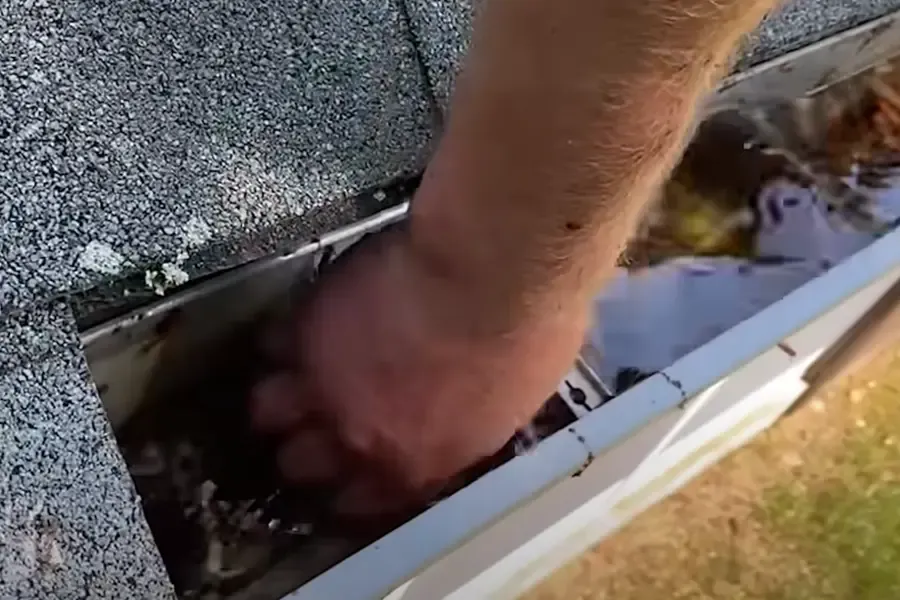
Cleaning should uncover the gutter bottom and restore the outlet. It should also include the lower path, because a clear upper opening is not much help when an elbow or extension remains packed.
Look at the Ground Before the Ladder
Wooded Oak Ridge lots can combine shade, roots, mulch, and changing grade around the eaves. Ladder feet need firm, level support, not a bed edge or damp clay. The low side of a house may place the same roofline much higher above the ground than the front view suggests.
The ground also tells the drainage story. Splash marks in a bed, a channel through mulch, or a damp patch beside a crawl-space wall may show where overflow or discharge concentrates. Red clay tends to move water along the surface once it is wet, so the downspout endpoint should direct flow away rather than into a hollow.
Cleaning Versus a Hardware Problem
Organic buildup calls for gutter cleaning. An empty channel that sags, retains a pool, or separates at a joint points toward repair. A branch impact may bend one section, while ice weight can pull at hangers along a longer run. Removing debris makes these conditions easier to evaluate.
Repeated overflow under a valley may not be a cleaning issue at all. The water may arrive too quickly for the existing outlet or guard opening. Watching from the ground during safe conditions helps distinguish a blocked section from a layout problem.
Are Guards Useful Under Oaks and Pines?
They can reduce broad leaf entry, but the fine debris controls the choice. An open screen may catch oak leaves yet allow needles and catkin fragments through. Micro-mesh can exclude smaller material while collecting pollen film on top. Neither option eliminates inspection.
For a low, accessible gutter, occasional cleaning may be simpler than adding a cover. For a high wooded roof, a guard may reduce volume if there is a realistic maintenance plan for its surface and valleys. Review the guard comparison before deciding.
Call (336) 530-1911 or use the contact form for an Oak Ridge quote. Include the tree mix, roof height, valley locations, and where each downspout ends. Those details matter more than a generic cleaning interval.