Gutter Service Shaped by the Property
A High Point gutter can face very different conditions from the house a few streets away. A compact lot beneath mature hardwoods may receive a concentrated fall drop. A more open property may collect fewer leaves but still catch pine needles, roof grit, and spring catkins. Roof additions, porches, and intersecting valleys can send several drainage paths toward one short run.
The useful starting point is the property itself: which trees overhang the roof, where valleys empty, how high the eaves sit above grade, and where each downspout releases water. Gutter cleaning should respond to those conditions instead of following a one-size schedule.
High Point Debris Through the Year
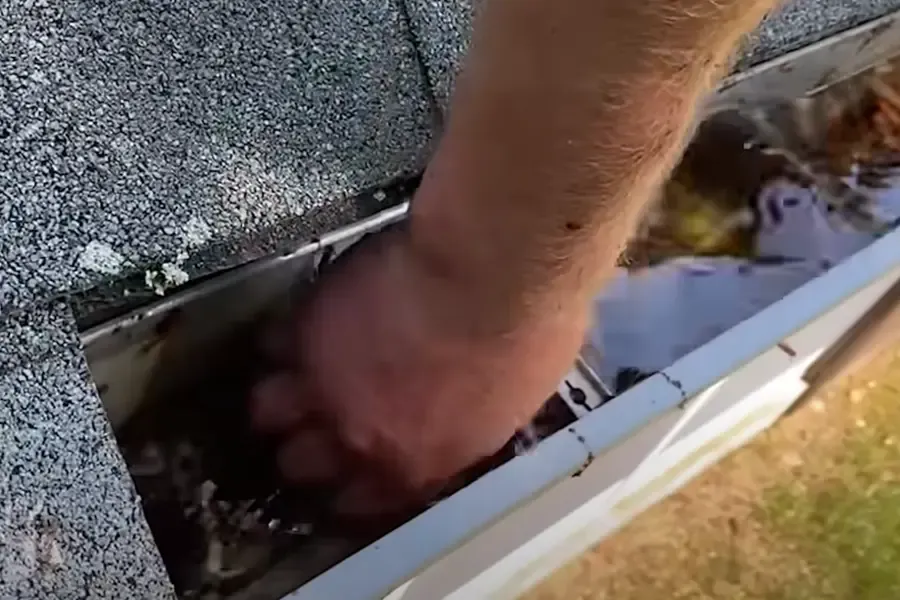
Pine needles are persistent because their narrow shape lets them slip through loose leaf piles and open guard screens. Willow oak and maple leaves add volume in fall, creating a broad layer that catches the needles. Once wet, that mixed material can form a mat above an outlet.
Spring adds pollen and catkins. The yellow-green film visible on outdoor surfaces also settles inside the gutter. Oak catkins curl into soft clumps that fit neatly around an outlet opening or downspout elbow. Even when the top of the channel looks mostly open, that small plug can slow the whole run.
Summer thunderstorms then supply the test. Water arriving quickly from a valley may overwhelm the remaining channel space and clear the front edge. Long soaking rain can reveal a different symptom: a joint that drips steadily or a low section that never fully drains.
Roofline and Grade Details Matter
Homes with porch roofs, rear additions, or multiple gables may have short gutter runs carrying water from several surfaces. Those corners should be watched from the ground during rain. A repeated spill at the same valley is useful evidence, but it does not automatically mean the gutter is dirty. Outlet placement, pitch, or a damaged section may be involved.
Grade changes around a High Point property can complicate ladder access. Red clay that feels firm when dry may become slick after rain. Planting beds, retaining edges, and sloped side yards can leave no safe place for ladder feet. In those conditions, staying on the ground is the practical choice even when the gutter section itself is short.
The lower drainage path deserves the same attention. Downspout extensions should direct water away from the structure and remain open at the endpoint. An extension pressed into mulch or ending in a low clay pocket can cause pooling after the upper clog has been removed.
Cleaning, Repair, or Guards?
Cleaning fits a system packed with leaves, needles, or catkins. Repair becomes relevant when a clear run still leaks at a seam, holds water in a low spot, or pulls away at its hangers. Gutter guards may reduce broad leaf entry, but larger screen openings can still admit pine needles. Fine mesh needs surface maintenance when pollen and organic film build up.
Easy access and modest debris may make an uncovered gutter the simpler choice. If water travels freely and the outlet is clear, another cleaning may not be needed yet. Inspect after the debris events that affect the roof rather than assuming every calendar date requires service.
Request a High Point Gutter Quote
Call (336) 530-1911 or send the contact form. Include the building height, roof valleys, main tree debris, and location of any overflow. Ground-level photos taken without climbing can show a sagging run, disconnected elbow, or difficult side-yard grade.
The aim is a continuous water route from roof to discharge. That may require debris removal, attention to a local failure, or simply monitoring a system that is already moving rain as intended.