Ice Changes the Safe Answer
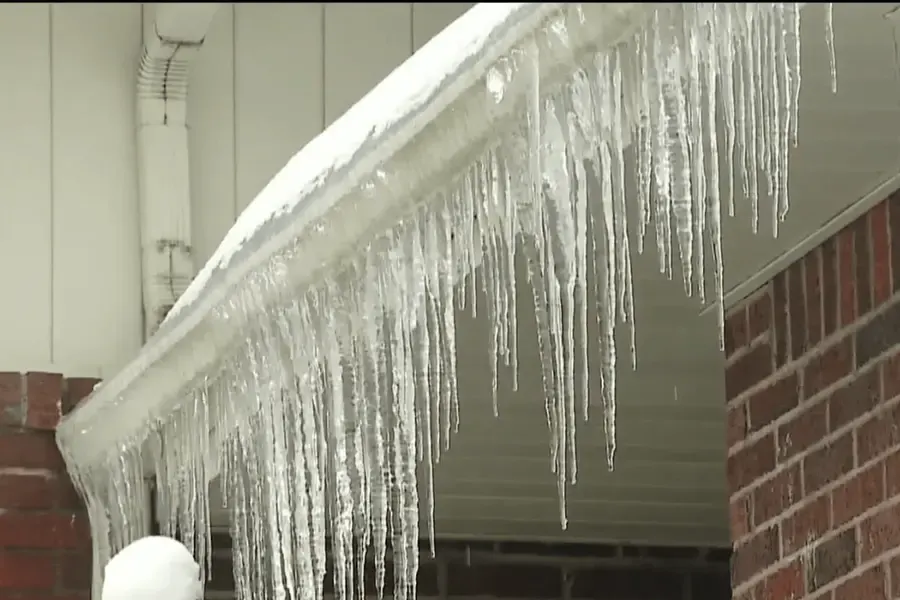
An occasional Piedmont ice storm can turn an ordinary gutter concern into a wait-and-watch situation. Ice adds weight along the roof edge, coats ladder surfaces, and makes branches more likely to shed twigs. The correct response during the freeze is usually patience, not prying.
Do not strike an iced gutter, pull at frozen debris, or climb to investigate a blockage. Metal can bend, joints can separate, and roofing edges can be damaged. More importantly, footing and handholds are unreliable. Wait for a thaw and dry ground.
What Ice Does to a Debris-Filled Run
Leaves, pine needles, and catkins hold water. When temperatures drop, that wet material freezes into a solid mass inside the channel. The added weight pulls on hangers and keeps joints under load. A long run or existing low spot may show the stress first.
Frozen debris also blocks meltwater. As sun reaches the roof, water may travel toward an outlet that remains iced. It finds another path over the lip or behind a shifted section. That symptom does not mean someone should attack the ice; it means the system should be checked after conditions improve.
Pine needles matter even in winter because they weave the debris together. A modest-looking layer can hold more frozen water than loose pieces would. Cleaning before cold weather may reduce that load when the roof actually has material present.
Post-Thaw Inspection
Wait until roofs, ladders, and soil are dry. Begin with the downspout outlet and extension. Ice may have shifted a connection or left debris at the endpoint. Then review the visible gutter line for low sections and gaps.
If safe access is possible, clear the organic debris and expose the gutter bottom. Standing water in an empty run suggests changed pitch or hanger support. A seam that opened under weight may continue dripping in later rain. Those are gutter repair questions, not reasons for repeated cleaning.
What Not to Promise Yourself
Heat devices, sharp tools, and improvised de-icing methods can damage components or create electrical and fire hazards. A gutter is not worth a winter fall. If water is not entering the home and the area below can be kept clear, waiting for natural thawing is usually the more controlled choice.
Also avoid using the gutter as a handhold once the ice is gone. Hangers may have shifted, and the run was never designed to support a person’s weight.