The First Decision Happens Before the Ladder
DIY gutter cleaning is not defined by whether a homeowner owns a ladder. It depends on roof height, grade, electrical clearance, weather, physical comfort, and whether the work can be completed without reaching sideways or stepping onto the roof.
Walk the Greensboro property in daylight. Look for soft red clay, roots, mulch, bed edging, equipment, and sloped side yards. Identify overhead service lines and wasp activity. If there is no obvious location for firm, level ladder feet, do not improvise a platform.
Gather Simple Protective Equipment
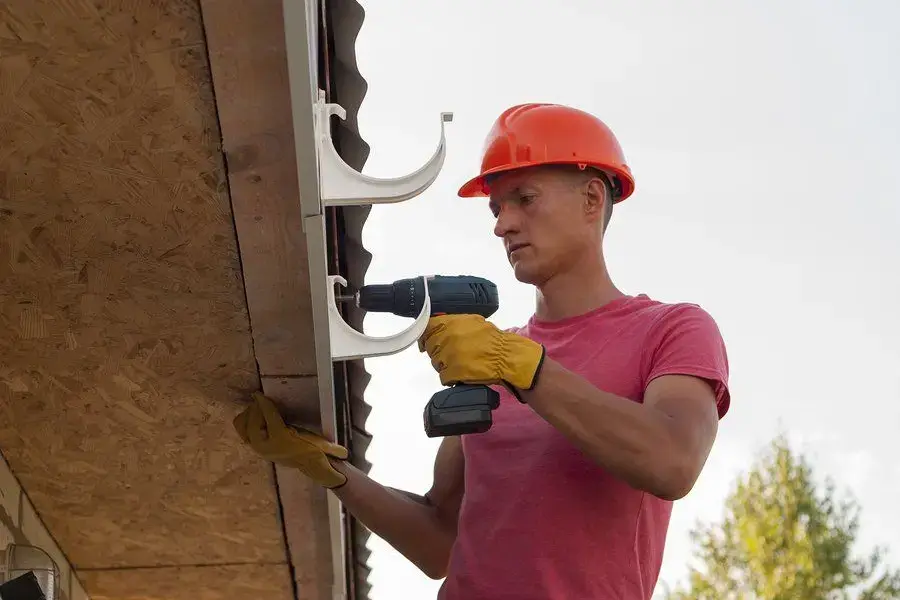
Use gloves because gutters can contain sharp twigs, metal edges, and unknown organic material. Eye protection helps when dry grit or catkins are disturbed. Wear footwear that grips the ground and keep clothing close enough that it will not catch.
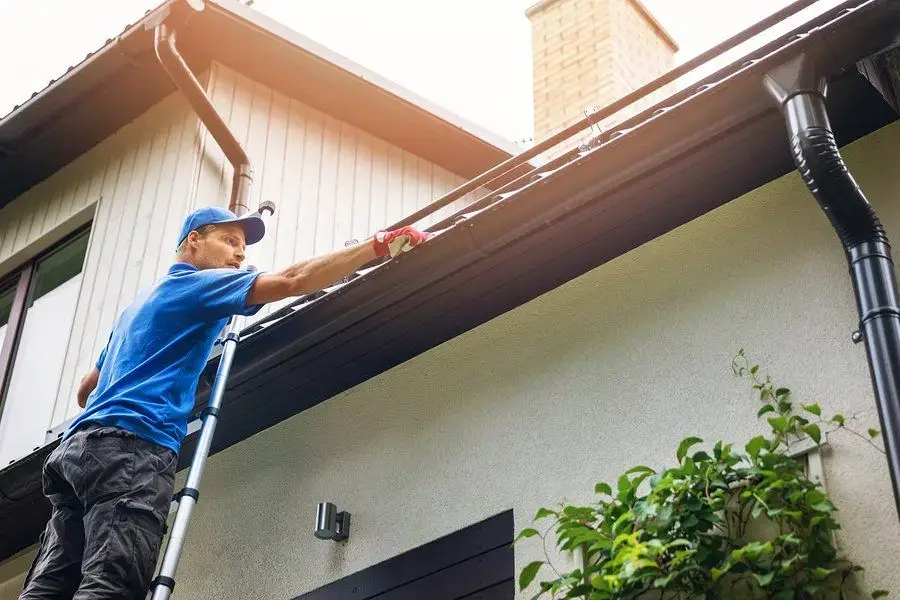
Choose a ladder designed for the required height and inspect it before use. Have another adult present. A helper can steady the base, keep the area clear, and respond if something goes wrong. A phone in a pocket is not a substitute for another person.
Buckets, small scoops, and simple hand tools are easier to control than an assortment of attachments. Plan how debris will come down without carrying an awkward load on the ladder.
Pick Dry, Calm Conditions
Do not climb during active overflow. Rain makes rungs, pollen-coated surfaces, and soil less predictable. Wind moves branches and shifts balance. Ice is an absolute stop condition.
Wait until the roof edge and ground have dried. Shaded clay may remain soft after the front walk looks ready. Test the placement area before setting the ladder, and reposition it often rather than leaning for the next handful.
Remove Debris Without Feeding the Downspout
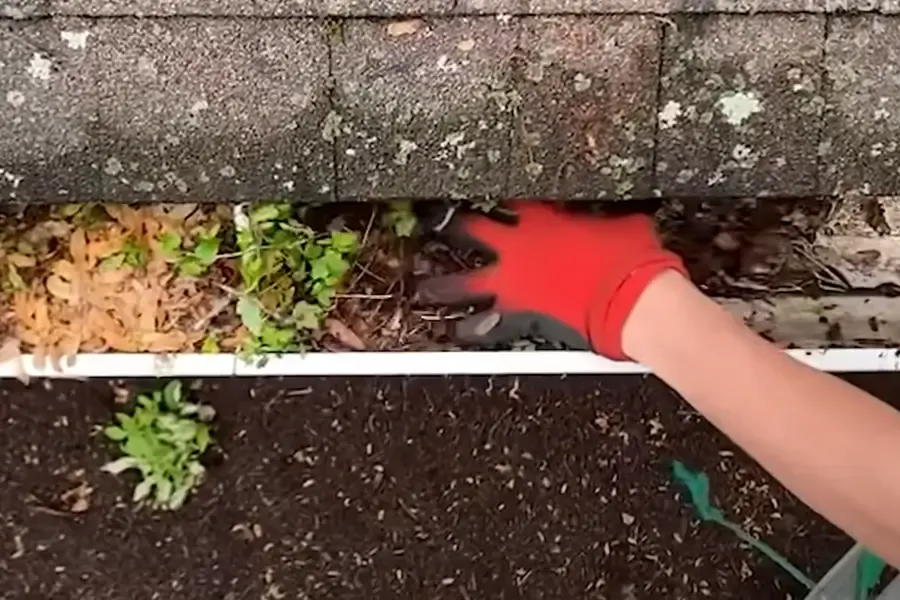
Start with broad leaves and twigs. Place them in a container instead of dropping them into landscaping or onto an extension. Then work through pine needles, catkins, and roof grit until the gutter bottom is visible.
Do not push a dense pile toward the outlet. A clog at the top is easier to control than one packed inside an elbow. Clear around the opening carefully. If the downspout does not release and the blockage cannot be reached without forcing a rigid object into unseen bends, stop.
The gutter cleaning service guide explains why the full path matters. An empty trough with a closed downspout will still overflow.
Observe the Gutter While It Is Empty
Look for standing water, separated joints, loose hangers, and bent sections. Do not pull or hang on the gutter. It is not a ladder handhold.
A broad pool remaining in one area suggests a low spot. A seam that leaks after the surrounding channel is clear may need dry-surface repair. A disconnected lower elbow should be restored so water does not spill beside the foundation. These conditions are separate from debris removal.
Finish at the Ground
Follow each downspout to its extension. Remove leaf piles from the endpoint and check for crushed sections. The extension should lead away from the house to an open area, not disappear into mulch or end in a red-clay hollow beside the wall.
During the next normal rain, observe the outlet from the ground. Water leaving steadily is better confirmation than the appearance of the top edge alone.
Know the Stop Conditions
Stay down when the eave is beyond a comfortable ladder height, the ground slopes, the roof is slick, wires are near the setup, or the gutter requires roof walking. Stop for active insects, damaged fascia, unstable attachments, and guards that cannot be opened without leaning.
The DIY service page provides a shorter checklist you can use before each attempt. Hiring help is not a failure of maintenance; it is the correct response when the access risk exceeds the simplicity of the cleaning.
A good DIY result is an open water route completed without shortcuts. If either half of that sentence becomes uncertain, return to the ground.